


EMG eMASS® electromagnetic strip stabilisation
Many hot-dipped galvanising lines (HDGL) tend to over-coat zinc and other coatings because the process control system is unable to compensate for strip oscillation and camber at the air knives, and hence cannot accurately control coating thickness. To ensure the guaranteed minimum thickness is achieved, the average thickness is higher […]

Revamping of skin pass mill for automotive products
Due to the increasingly stringent product requirements, galvanising lines dedicated to automotive products have to be modernised in order to meet market needs. In 2017, Segal, a Tata Steel galvanising line in Belgium, placed an order with CMI to increase line capacity and to be able to process a wider […]

Challenges, innovation and designs in galvanising technologies for AHSS
Steel grades requiring galvanising have changed dramatically in the last 20 years, going from simple carbon grades for construction to ultra-high tensile strength dual phase grades and extra soft and deep drawing qualities for automotive applications. These new steels have required key modifications and improvements in galvanising lines. For instance, […]

Process–based Level 2 systems for stable, lower cost blast furnace operations
In order to organise and create good and actionable information from the tsunami of data that, today, is flowing into blast furnace control rooms, Level 2 automation systems are being developed and constantly improved within the industry. Danieli Corus believes the need for them will continue to grow, led by […]
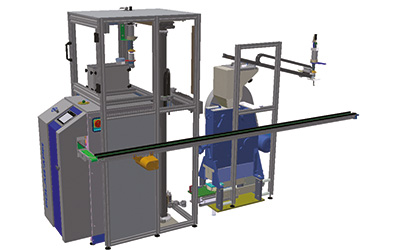
High-precision automated slag sample preparation for XRF and XRD applications
Analysis of steel slag is a significant requirement in the control of the steelmaking process and to maintain and expand the opportunities for slag reuse. In order to allow fast, highly precise analysis with a high sample throughput rate, thyssenkrupp has developed an automated slag sample preparation line from crushing […]

Comparison of EAF dip test short circuit impedance measurement with impedance computation
The conventional method of determining the short circuit impedances of electric arc furnaces, which are characteristic design quantities, is by dip tests where electrodes are dipped into the molten steel and appropriate measurements taken. This technique has a number of limitations and inaccuracies, so BSE has developed an off-line computational […]

Mi.DA 4.0: Endless casting and rolling process empowered by digital technologies
Mi.DA, or ‘Micro-mill Danieli’, has been in industrial operation since 2009. Its benefits in terms of cost reduction and operating efficiency are well documented. Over the last decade there has been an incredible development of information and communications technologies as the availability and speed of mobile internet connections has ever […]
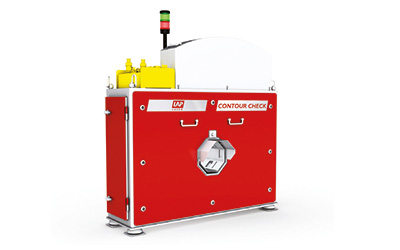
Optical contour measurement and 3D surface inspection of rebars
LAP has added a new function to its CONTOUR CHECK SHAPE measurement system. It is specifically designed for measurement of rebars as it measures the entire contour without shadow effects and generates recommendations for action from the measured data. Its complete and precise measurement of contours also makes numerous sampling […]

Model predictive control applied to a continuous annealing line
In continuous processing lines, product quality requirements demand that strip annealing temperature is accurately and precisely controlled. Most annealing furnaces are regulated by Proportional Integral Derivative (PID) controllers which, being reactive to process variations, could result in off-specification material. To address this issue Fives has developed Model Predictive Control (MPC). […]

世界钢铁协会对标系统
世界钢铁协会是世界上规模最大、活跃度最高的行业协会之一,代表了大约160家钢铁生产企业(其中 包括世界上10家最大型钢铁企业其中的9家),以及各国和各地区的钢铁行业协会和钢铁研究机构,会 员企业粗钢产量占世界粗钢产量的大约85%。世界钢铁协会的使命是在全球钢铁行业事务中发挥核心作 用,在事关全球钢铁行业发展的主要战略性问题,尤其是技术工艺研发、经济、环境和社会可持续发展 方面,世界钢铁协会起领导作用。 方面,世界钢铁协会起领导作用。